
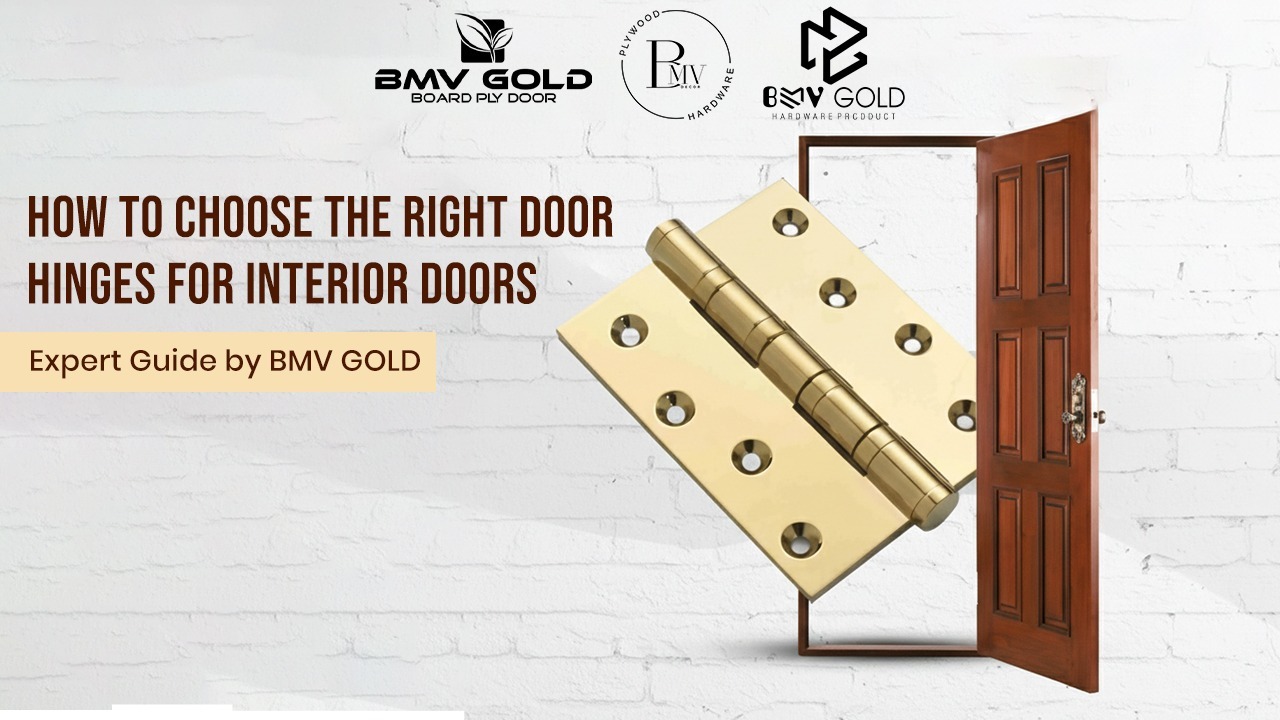
When it comes to interior doors, most people focus on design, color, or handles — but the real performance lies in the hinges. Selecting the correct hinges is essential for smooth operation, durability, and long-term reliability. Understanding the types of door hinges for interior doors, following a proper door hinge size guide, choosing the correct interior door hinge size, and selecting the best hinge material for interior doors can completely transform how your doors function.
Poor hinge selection often leads to sagging doors, squeaking sounds, loose fittings, and premature wear. That’s why investing in premium-quality BMV GOLD Hinges ensures superior strength, smooth movement, and long-lasting performance. This expert guide will help you avoid common door hinge buying mistakes while selecting the right door hinge finishes and understanding how many hinges for interior door installation are required.
Choosing the right types of door hinges for interior doors depends on door weight, usage, and design preference. High-quality BMV GOLD Hinges are engineered to suit different residential and commercial needs.
Butt hinges are the most widely used hinges for interior doors. They are durable, simple, and ideal for standard wooden doors. Most standard interior door hinge size options include 3-inch and 4-inch butt hinges.
Ball bearing hinges are designed for heavy doors or frequently used doors. They reduce friction and prevent noise. For long-term reliability, BMV GOLD Hinges with ball bearing mechanisms provide extra strength and smoother operation.
These hidden hinges are perfect for modern interiors. They remain invisible when the door is closed and enhance the overall interior door hardware finish appearance.
Spring hinges automatically close the door and are ideal for kitchens and office spaces.
Pivot hinges support the door from top and bottom, making them suitable for heavy or designer doors.
Understanding different types of door hinges for interior doors helps you choose wisely based on performance and style.
Following a reliable door hinge size guide is critical for door alignment and durability.
The correct interior door hinge size typically includes:
Premium BMV GOLD Hinges are available in multiple size options to match different door weights.
Ignoring weight capacity is one of the biggest door hinge buying mistakes. Heavy doors require larger hinges with stronger load-bearing capacity.
Choosing the right interior door hinge size ensures long-term balance and performance.
Selecting the best hinge material for interior doors ensures durability and resistance to corrosion.
Stainless steel is highly durable and rust-resistant, making it one of the best hinge materials for interior doors, especially in humid environments.
Brass hinges offer a premium look and excellent corrosion resistance. They pair beautifully with elegant door hinge finishes.
Cost-effective and strong, mild steel hinges are suitable for standard applications.
By choosing the best hinge material for interior doors, such as those used in BMV GOLD Hinges, you ensure reliability for years.
Many homeowners ask: how many hinges for interior door installation are required?
Solid wood doors may require additional hinges depending on weight.
Understanding how many hinges for interior door installation prevents structural stress and increases hinge life. Using durable BMV GOLD Hinges ensures optimal performance even under heavy load.
The right door hinge finishes enhance both design and consistency.
Matching your interior door hardware finish with handles and locks creates a cohesive design.
High-quality BMV GOLD Hinges are available in multiple door hinge finishes, allowing you to combine strength with style.
Avoiding door hinge buying mistakes ensures durability and safety.
Using the wrong interior door hinge size leads to sagging and poor closing.
Selecting hinges without checking weight capacity is a major door hinge buying mistake.
Not selecting the best hinge material for interior doors reduces lifespan.
Using premium BMV GOLD Hinges helps avoid these common problems.
Choosing the right hinges is more than just selecting hardware. It requires understanding the types of door hinges for interior doors, following a proper door hinge size guide, selecting the correct interior door hinge size, choosing the best hinge material for interior doors, and knowing how many hinges for interior door installation are required.
Additionally, selecting the right door hinge finishes and matching the interior door hardware finish ensures both functionality and aesthetics. Avoid common door hinge buying mistakes and invest in high-quality BMV GOLD Hinges for long-lasting performance, smooth operation, and elegant interior appeal.